THE HEART WANTS WHAT THE HEART WANTS
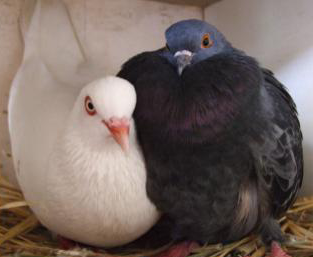
Orlando is fundamentally, and perhaps most importantly, a love story.
Based on a novel by the groundbreaking writer Virginia Woolf, Orlando, for her, was first and foremost a love letter to Vita Sackville-West, a fellow writer in the 1920s with whom Woolf had been having what today we could call a polyamorous relationship.
Orlando seeks throughout the play to understand life and love after falling hard for a mysterious Russian aristocrat, Sasha, who betrays and abandons Orlando in "his" first incarnation as a shy but handsome nobleman. While Orlando lives several centuries more, and becomes a woman midway through the play, the ghost of his/her/their love for Sasha haunts the entire play, leaving Orlando to wonder why the heart wants what it wants. One of many questions the novel and the play pose for the audience: how does love seize us so fiercely and what does it mean for our lives that love can seem to exert this independent force upon our will and our fate?
GENDER FLUIDITY

Nearly a century before the use of they/them pronouns became a way for advocates of non-binary identities and gender fluidity to break the grammatical grip of gender- and hetero-normativities, Woolf deftly uses they and their to convey the transition and overlap as Orlando adjusts to his/her/their new body and emerging identity:
He stood upright in complete nakedness before us, and … we have no choice left but confess—he was a woman… We may take advantage of this pause in the narrative to make certain statements. Orland had become a woman—there is no denying it. But in every other respect, Orlando remained precisely as he had been. The change of sex, though it altered their future, did nothing whatever to alter their identity. Their faces remained, as their portraits prove, practically the same. His memory—but in future we must, for convention's sake, say 'her' for 'his,' and 'she' for 'he'—her memory then, went back through all of the events of her past life without encountering any obstacle.
Whether in novel or play form, Orlando invites us to reflect on the dislocation experienced when one suddenly loses all privilege, the confusion of seeing the gender divide from the other side, and the distortions of memory wrought by time and power. Do we better understand the desperate clinging to gender privilege we see in today's world, or feel a deepened horror at the fact that one sex desires to rule over the other? Or perhaps both? Whatever feeling we are left with after encountering this story, our views on gender and power will find themselves challenged, perhaps altered entirely…
DETERMINATION

Orlando's character transcends time, gender, and convention, but the journey is far from an easy one for our shape-shifting protagonist. Seeking love, meaning, purpose, understanding, and above all, the ability to express themself in poetry, Orlando role models for us the determination to be that we so often crave but often cannot muster. Forced to face reincarnation in the same body—well, mostly—Orlando has no choice but to continue facing the struggle every human must endure: living.
What can we learn from Orlando's implausible romp through the past five centuries? Perhaps the grace to take things as they are, which Orlando displays at each transition with an almost Buddha-like equanimity. Perhaps also a sense that commitment to one's self, one's path, one's core identity, requires that rare combination of grit and whimsy. And yet also: perhaps merely a sense that we each have the inner resources needed simply to persist.
THE TIMELESSNESS OF LOVE
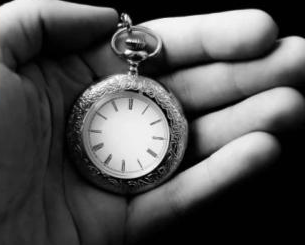
What does it mean to live as a timebound being? This is yet another of the questions raised by the novel and the play
Orlando transcends time through rebirth every century and never ages beyond their 4th decade, emerging in each new era with body, memory, and emotions intact, yet, of course, Orlando does not in any sense escape time, for the conventions, expectations, technologies, and politics of each new era shape and constrain Orlando's life.
Yet throughout this journey, one thing remains constant: Orlando's love for Sasha, who reappears in ghostlike fashion at various points in the play, reminding us of the timelessness of Orlando's first and only true love, the allegorical rendering of Virginia Woolf's love for Vita Sackville-West. Woolf's novel is sometimes referred to as a love letter, and indeed Orlando's long biography follows in numerous particulars the family of the Sackwille-Wests.
More than this, however, the play asks us to meditate upon what remains constant amid the incessant change of history and our own lives.
For Orlando, each change of body, century, or circumstance is accompanied by a sense of continuity. Orlando looks at him-/her-/themself at each moment and finds that nothing on the inside has changed. Is love the core of our true self? Memory? Some indefinable sense of me-ness that carries loves and interests and perspectives through the many phases and stages of a full, rich life? Yet again, the novel and the play do not tell us so much as invite us to reflect…
LIVING TRUTHFULLY

If the novel and the play can be said to have a central theme at all, it may be this: we are all multiple selves, yet bound within a single body, enmeshed in a single time, surrounded, clothed, pushed around by the societal expectations of the day that cling to the sex of that body and the ideas of that time. Given this, how, if at all, is it possible to live truthfully as our authentic selves?
Once again, Orlando poses us a troubling question: Why do we have to be just one thing to the world?
And the world responds: Well, my dear, because that is what we demand, fair or not…
But must we give into to what the world demands?...
We are left to decide that for ourselves, but we cannot evade the assertion that living truthfully requires a reckoning with what the world expects and a decision about when, how, and why we give in—or don't give in…